Buying a home is one of the biggest financial decisions in a person’s life. However, for many years in India, homebuyers faced several problems such as project delays, builder fraud, lack of transparency, and unfair agreements. Many buyers invested their life savings in real estate projects only to face delayed possession or incomplete construction. To address these issues and protect the interests of homebuyers, the Government of India introduced the Real Estate Regulatory Authority (RERA) through the RERA Act India, which came into effect in 2016.
Today, the Real Estate Regulatory Authority plays a crucial role in bringing transparency, accountability, and efficiency to the real estate sector. Whether you are planning to buy a flat in Chandigarh, invest in a residential project, or deal with a property dispute, understanding RERA rules for buyers and RERA registration is extremely important.
This comprehensive guide explains everything homebuyers need to know about the RERA Act India, including its objectives, benefits, builder responsibilities, complaint process, and legal remedies available for buyers.
1. What is RERA Act
The RERA Act India stands for the Real Estate (Regulation and Development) Act, 2016, which was introduced to regulate the real estate sector and protect the interests of property buyers.
Under this act, the Real Estate Regulatory Authority (RERA) was established in every state to regulate real estate transactions, ensure transparency in project details, and resolve disputes between buyers and developers.
The primary purpose of the Real Estate Regulatory Authority is to ensure that builders and developers follow legal standards while selling properties.
Key Features of RERA
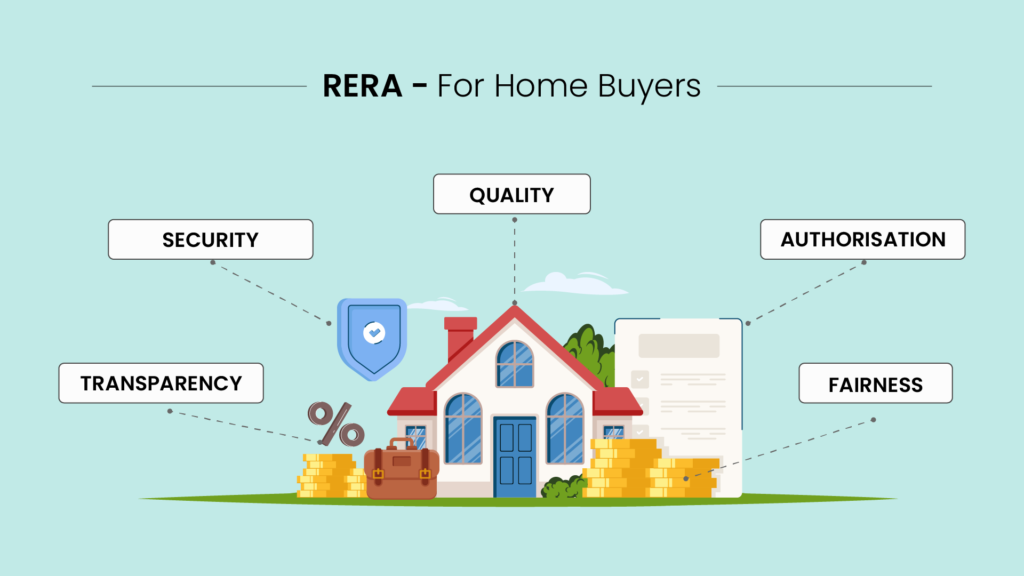
- Mandatory RERA registration for real estate projects
- Transparency in project details
- Protection of homebuyer rights
- Strict penalties for builders violating rules
- Faster dispute resolution
If you are planning to buy property in cities like Chandigarh, checking the RERA registration of the project is one of the most important steps before investing.
2. Why RERA was Introduced
Before the introduction of the RERA Act India, the real estate sector in India faced several issues that negatively affected homebuyers.
Some of the most common problems included:
Project Delays
Many builders delayed project completion by several years, leaving buyers waiting endlessly for possession.
Lack of Transparency
Developers often failed to disclose accurate project details such as approvals, land status, and completion timelines.
Misuse of Funds
In many cases, builders used funds from one project to finance another project, which caused construction delays.
Unfair Builder Agreements
Homebuyers were often forced to sign agreements that favored developers and provided little protection to buyers.
No Proper Grievance System
Before RERA, buyers had limited options to file complaints against builders.
To solve these issues and create a fair real estate market, the government implemented the Real Estate Regulatory Authority under the RERA Act India.
Also Read: RERA vs Consumer Forum | Which Is the Right Remedy for Homebuyers?
3. Key Objectives of RERA
The Real Estate Regulatory Authority aims to regulate the real estate sector and protect homebuyers.
Transparency in Real Estate
Builders must disclose project details such as:
- Project approvals
- Construction timeline
- Land title details
- Project layout and plans
Protection for Buyers
The RERA rules for buyers ensure that developers cannot cheat or mislead homebuyers.
Timely Project Completion
Builders must complete projects within the declared timeline.
Standardized Sales Process
Builders must follow legal procedures while selling property.
Fair Real Estate Market
The act ensures fairness for both buyers and developers.
These objectives have significantly improved the credibility of the real estate industry across India, including major cities like Chandigarh.
Also Read: Buying and Selling Property in India as an NRI: Legal Due Diligence and Compliance
4. Benefits for Homebuyers
One of the biggest advantages of the RERA Act India is the protection it provides to homebuyers.
Transparency
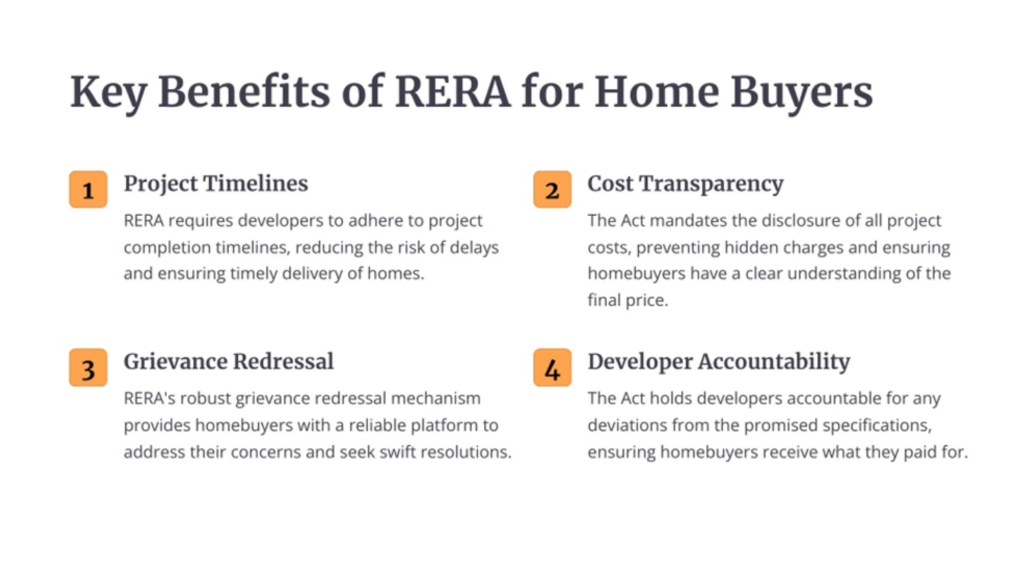
Builders must upload complete project details on the RERA website, which allows buyers to verify project authenticity.
Protection Against Delays
If the builder delays possession, the buyer can claim compensation.
Legal Protection
The Real Estate Regulatory Authority provides a legal platform where buyers can file complaints.
Quality Assurance
Builders are responsible for fixing structural defects for up to five years after possession.
Accurate Project Information
Builders must provide correct details about:
- Carpet area
- Project approvals
- Completion timeline
- Construction progress
These benefits help buyers make safe investment decisions when purchasing property in cities like Chandigarh.
5. Builder Responsibilities Under RERA
The RERA rules for buyers also define several responsibilities for developers and builders.
Mandatory RERA Registration
Builders must register their project with the Real Estate Regulatory Authority before selling any units.
Accurate Project Information
Developers must disclose complete details of the project, including approvals and construction status.
Separate Project Account
Builders must deposit 70% of the funds collected from buyers into a dedicated bank account used only for project construction.
Timely Project Delivery
Developers must deliver the project within the declared timeline.
Fixing Structural Defects
Builders must correct structural defects within five years of possession.
Failure to comply with these responsibilities can result in penalties under the RERA Act India.
6. RERA Registration Process
One of the most important provisions under the RERA Act India is RERA registration.
Every real estate project must be registered with the Real Estate Regulatory Authority before advertising or selling units.
Steps for RERA Registration
- Visit the state RERA website
- Fill the registration form
- Submit project details
- Upload necessary documents
- Pay registration fees
Documents Required for Registration
Builders must submit:
- Land ownership documents
- Project layout plan
- Construction schedule
- Government approvals
- Project specifications
Once approved, the project receives a RERA registration number, which must be displayed in advertisements.
For example, buyers purchasing property in Chandigarh should always verify the RERA registration number before booking a property.
7. How to File RERA Complaint
If a builder violates RERA rules for buyers, homebuyers can file a complaint with the Real Estate Regulatory Authority.
Common Reasons for Filing Complaint
- Delay in project completion
- Builder refusing possession
- Misleading advertisements
- Structural defects
- Violation of project plans
Steps to File RERA Complaint
- Visit the official state RERA website
- Register an account
- Fill the complaint form
- Upload supporting documents
- Pay the complaint fee
Once submitted, the authority reviews the case and may conduct hearings before issuing a decision.
The RERA Act India ensures faster dispute resolution compared to traditional court cases.
8. Documents Required for RERA Complaint
To file a complaint under the Real Estate Regulatory Authority, buyers must provide supporting documents.
Important documents include:
- Property booking agreement
- Builder-buyer agreement
- Payment receipts
- Project advertisement details
- Communication with the builder
- Project documents
These documents help establish the buyer’s claim and support the complaint.
Homebuyers in Chandigarh should maintain all property-related documents to protect their rights under RERA rules for buyers.
9. Penalties Under RERA
The RERA Act India includes strict penalties for developers who violate the law.
Penalty for Non Registration
If a builder sells a project without RERA registration, the penalty can be up to 10% of the project cost.
Continued Violation
Builders may face imprisonment of up to 3 years if they continue violating RERA regulations.
False Information
Providing incorrect project information may result in heavy fines.
Non Compliance with RERA Orders
Failure to comply with orders issued by the Real Estate Regulatory Authority may lead to additional penalties.
These strict penalties help ensure that developers follow the law and protect buyer interests.
10. When to Contact a RERA Lawyer
Although the Real Estate Regulatory Authority Act India simplifies dispute resolution, legal guidance is often necessary in complex cases.
You should consult a Real Estate Regulatory Authority lawyer in the following situations:
- Builder delaying project possession
- Builder refusing refund
- Misleading property advertisements
- Structural defects in property
- Violation of RERA rules
A legal expert can help you understand your rights and guide you through the complaint process.
Importance of RERA for Cities Like Chandigarh
Cities such as Chandigarh have witnessed rapid real estate development over the past decade. With increasing demand for residential and commercial properties, the role of the Real Estate Regulatory Authority has become even more important.
The Real Estate Regulatory Authority Act India ensures that:
- Buyers get transparent project information
- Builders follow legal guidelines
- Property disputes are resolved efficiently
This makes property investment safer for homebuyers in Chandigarh and across India.
Conclusion
The Real Estate Regulatory Authority Act India has transformed the real estate sector by introducing transparency, accountability, and buyer protection.
With the establishment of the Real Estate Regulatory Authority, homebuyers now have legal protection against builder fraud, project delays, and unfair agreements.
Understanding RERA rules for buyers, RERA registration, and complaint procedures helps property buyers make informed decisions and safeguard their investments.
Whether you are purchasing property in Chandigarh or any other city in India, always verify the Real Estate Regulatory Authority registration of the project and understand your rights under the law.

Need Legal Help for RERA Case?
If you are facing a property dispute, project delay, or builder fraud, professional legal guidance can help you protect your rights.
Consult Advocate Narender Yadav – High Court Lawyer
Expert in Civil, Property, RERA, Consumer, and Service Matters
Get professional legal support for:
- Builder delay possession cases
- Property disputes
- RERA complaint filing
- Real estate fraud cases
Taking timely legal action can help you secure justice and protect your investment.
Frequently Asked Questions
1. What is the RERA Act in India?
The Real Estate Regulatory Authority Act India refers to the Real Estate (Regulation and Development) Act, 2016, which was introduced to regulate the real estate sector and protect homebuyers from builder fraud, project delays, and lack of transparency. The act established the Real Estate Regulatory Authority in each state to monitor real estate projects and resolve disputes between buyers and developers.
2. Why is Real Estate Regulatory Authority registration important before buying property?
Real Estate Regulatory Authority registration ensures that the real estate project is legally approved and monitored by the Real Estate Regulatory Authority. It guarantees transparency in project details, protects buyers from fraud, and ensures that builders follow the rules regarding project completion and fund usage.
3. How can I check if a property project is Real Estate Regulatory Authority registered?
Homebuyers can check the Real Estate Regulatory Authority registration of a project by visiting their state’s official RERA website. By entering the project name, builder name, or registration number, buyers can verify important details such as approvals, project timeline, and construction progress.
4. What rights do homebuyers have under Real Estate Regulatory Authority rules?
The Real Estate Regulatory Authority rules for buyers provide several protections, including the right to accurate project information, timely possession of property, compensation for project delays, and legal support through the Real Estate Regulatory Authority in case of disputes with builders.
5. When should a homebuyer file a complaint under Real Estate Regulatory Authority?
A homebuyer can file a complaint with the Real Estate Regulatory Authority if the builder delays possession, provides false project information, refuses to refund money, violates the builder-buyer agreement, or fails to complete the project as promised.