Buying a home is one of the biggest financial decisions in a person’s life. When a builder fails to deliver promised facilities or compromises on Quality Construction, it creates not only financial stress but also emotional distress for the buyer.
The Failure of Builder to Provide Basic Amenities such as water supply, electricity connection, lifts, security systems, fire safety, proper roads, drainage, parking, or club facilities is not just a minor issue. It may amount to a serious legal violation under Indian law.
In India, homebuyers are protected mainly by two strong legal frameworks:
- The Real Estate (Regulation and Development) Act, 2016 (RERA)
- The Consumer Protection Act, 2019
These laws provide statutory remedies when a builder fails to meet promised standards.
In this detailed guide, we will explain:
- Legal duties of builders
- What amounts to statutory violation
- Remedies under RERA
- Remedies under Consumer Law
- How to choose the right forum
- Practical legal strategy for homebuyers
Legal insights in this article are aligned with the professional approach adopted by Advocate Narender Yadav, Founder of The Law Office of Narender Yadav, Chandigarh, who regularly handles property disputes, RERA complaints, and consumer litigation.
Understanding Builder Obligations Under Law
1. Legal Obligations Under RERA
The Real Estate (Regulation and Development) Act, 2016 was enacted to bring transparency and accountability to the real estate sector.
Under RERA, builders must:
- Construct according to approved building plans
- Follow sanctioned layouts
- Deliver promised amenities mentioned in brochure or agreement
- Complete construction within the declared timeline
- Maintain transparency in disclosures
Section 11 – Duties of Promoter
Section 11 clearly states that the builder must adhere to the plans and specifications approved by the competent authority.
If the builder:
- Changes layout without consent
- Reduces amenities
- Uses inferior materials
- Deviates from approved plans
It amounts to non-compliance under RERA.

2. Section 14 – Defect Liability
Section 14 is very important for cases involving Quality Construction issues.
If after possession:
- Structural defects appear
- Poor workmanship is noticed
- Plumbing or electrical systems fail
- Waterproofing problems arise
- Cracks develop in walls
The builder is legally obligated to rectify these defects within the defect liability period (usually 5 years from possession).
Failure to rectify can lead to compensation liability.
What Are “Basic Amenities”?
Basic amenities include:
- Water supply connection
- Electricity supply
- Sewage and drainage system
- Lifts
- Fire safety system
- Security and CCTV
- Parking area
- Roads and internal pathways
- Common areas
- Clubhouse (if promised)
- Green areas
- Boundary walls
If these were promised in brochures, advertisements, or agreement for sale, the builder is legally bound to provide them.
The Failure of Builder to Provide Basic Amenities is not a small contractual lapse — it can be a statutory violation.
Also Read: Delayed Possession by Builder: How RERA Helps You Get Your House Keys & Compensation
Regulatory Remedies Under RERA
RERA is mainly a regulatory authority. It ensures compliance and transparency.
When Should You Approach RERA?
RERA is most suitable when:
- Entire project lacks common amenities
- Builder deviates from approved layout
- Common areas are incomplete
- Project registration disclosures are false
- Completion certificate is missing
- Occupation certificate not obtained
Powers of RERA Authority
The RERA Authority can:
- Direct the builder to complete pending work
- Order rectification of defects
- Impose penalties
- Award interest for delay
- Award compensation
- Freeze project registration in serious cases
RERA works effectively in project-wide issues where multiple buyers are affected.
Also Read: Agreement to Sale & Buyer Rights in India: A Complete Legal Guide
Example: Project-Wide Deficiency
Suppose:
- Builder promised a swimming pool and clubhouse
- After possession, both are missing
- Roads are incomplete
- Drainage system not functional
This is clearly a case of Failure of Builder to Provide Basic Amenities affecting all buyers.
RERA becomes the strongest forum for enforcement.

Remedies Under Consumer Protection Law
The Consumer Protection Act, 2019 provides another powerful remedy.
Unlike RERA, which focuses on regulatory compliance, Consumer Commissions focus on compensation and individual loss.
What Is Deficiency in Service?
Under consumer law, a builder’s failure may amount to:
- Deficiency in service
- Unfair trade practice
- Misrepresentation
- False advertising
If the buyer suffers:
- Financial loss
- Mental harassment
- Loss of rental income
- Inconvenience
- Health risk due to poor construction
Consumer Commission can award compensation.
When Consumer Law Is More Suitable
Consumer law is better suited when:
- Defect is specific to one flat
- Leakage in your unit
- Structural crack in your apartment
- Inferior fittings used
- Non-functional plumbing
- Poor flooring or tiles
In such cases, the issue is individual rather than project-wide.
Consumer Commission can order:
- Rectification
- Refund
- Replacement
- Compensation
- Interest
- Litigation costs
Comparison: RERA vs Consumer Forum
| Factor | RERA | Consumer Commission |
|---|---|---|
| Nature | Regulatory | Compensatory |
| Suitable for | Project-wide issues | Individual defects |
| Relief | Rectification, penalties | Compensation, refund |
| Focus | Compliance | Loss suffered |
| Time sensitivity | Relatively faster | Depends on case load |
Both remedies can sometimes run parallel, depending on strategy.
Can You Approach Both?
Yes. Courts have clarified that remedies under RERA and Consumer Law are not mutually exclusive.
However, proper legal strategy is essential. Filing blindly in both forums may cause procedural complications.
An experienced property lawyer like Advocate Narender Yadav, Founder of The Law Office of Narender Yadav, Chandigarh, carefully evaluates:
- Nature of deficiency
- Stage of project
- Relief required
- Prior proceedings
- Evidence available
Before deciding the best forum.
Practical Legal Strategy
Step 1: Gather Evidence
- Agreement for sale
- Brochure
- Advertisement copy
- Payment receipts
- Site photographs
- Engineer inspection report
- Emails with builder
Documentation is critical.
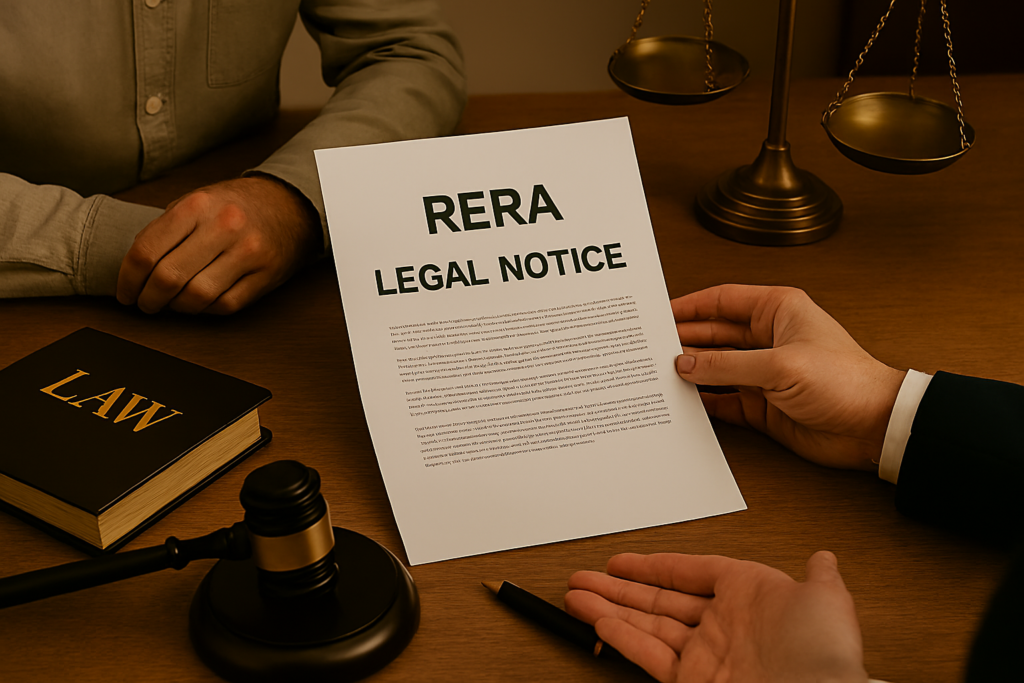
Step 2: Send Legal Notice
Before filing complaint, a legal notice is often sent demanding:
- Rectification
- Completion of amenities
- Compensation
Many disputes settle at this stage.
Step 3: Choose Correct Forum
Decision depends on:
- Nature of issue
- Urgency
- Type of relief sought
If compensation is primary goal → Consumer Commission
If completion of project is priority → RERA
Structural Defects and Quality Construction Issues
Quality construction is not just about appearance. It includes:
- Structural stability
- Earthquake resistance
- Proper foundation
- Water-proofing
- Electrical safety
- Fire compliance
Poor construction can:
- Reduce property value
- Endanger lives
- Cause recurring maintenance expenses
Courts have repeatedly held that Quality Construction is a legal obligation, not a luxury promise.
Mental Harassment and Compensation
Consumer Commissions recognize mental harassment caused by:
- Delayed possession
- Non-functional amenities
- Repeated repair issues
- Living in incomplete project
Compensation may include:
- Refund with interest
- Damages
- Litigation costs
- Interest on deposited amount
Important Judicial Principles
Indian courts have emphasized:
- Brochure promises are binding
- Amenities form part of contract
- Occupation certificate without amenities is incomplete compliance
- Structural safety cannot be compromised
Builders cannot hide behind minor technical excuses.
Common Legal Defences by Builders
Builders often argue:
- Minor variation is permissible
- Delay due to force majeure
- Buyer default in payment
- Amenities were “proposed” not guaranteed
Proper documentation defeats these arguments.
Timeline Considerations
- Defect liability usually 5 years
- Consumer complaints must be filed within limitation period
- RERA complaints must be filed promptly
Delay weakens legal position.
Importance of Legal Expertise
Real estate litigation requires:
- Knowledge of statutory provisions
- Drafting precision
- Understanding of procedural law
- Strategic forum selection
Legal professionals like Advocate Narender Yadav, Founder of The Law Office of Narender Yadav, Chandigarh, specialize in property disputes involving RERA and Consumer Law and help buyers protect their investment effectively.
Conclusion
The Failure of Builder to Provide Basic Amenities or deliver Quality Construction is not just a breach of promise — it is a statutory violation under Indian law.
Homebuyers today have strong legal protection through:
- Real Estate (Regulation and Development) Act, 2016
- Consumer Protection Act, 2019
RERA ensures regulatory compliance and project-level enforcement.
Consumer Law ensures compensation for individual loss.
By choosing the right forum and building a strong case with evidence, buyers can enforce accountability.
Builders are not answerable only to brochures — they are answerable to law.
If you are facing such issues, legal advice at an early stage can prevent long-term financial loss and ensure that your dream home meets the standards you were promised.
FAQs
1. Can I file complaint in RERA after possession?
Yes, especially for structural defects within defect liability period.
2. What if builder refuses to repair defects?
You can file complaint under RERA or Consumer Commission for compensation.
3. Can I claim compensation for mental harassment?
Yes, Consumer Commissions often award compensation for mental distress.
4. Is brochure legally binding?
Yes, courts consider brochure promises as binding representations.
5. How long does RERA case take?
It varies by state, but RERA is generally faster than traditional civil courts.